


Jetpack Joyride Racing
3.425.00 Reviews
App Specs
- Version
- 1.2.1
- Updated On
- License
- Free
- Downloads
- 100,000+
- Developer
- Halfbrick Studios
- Categories
- Racing
- Platform
- Android
Screenshots
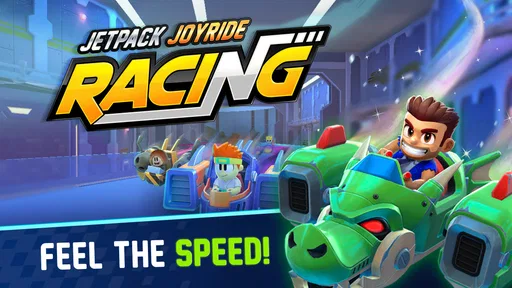



 Analysis by AppCompare
Jetpack Joyride Racing immediately feels like a curious change of direction for Halfbrick Studios. Instead of building its identity around the familiar endless-runner format associated with Jetpack Joyride, this free racing game places speed, drifting, rally-style competition, and collectible cards at the center. I found that combination easy to understand within a few races, but it also creates a more deliberate experience than the name might suggest. This is not simply a reskinned version of an older arcade game; it asks you to read corners, manage momentum, and decide how much attention to give the card-collecting layer.
As a racing game for Android, it is aimed at people who want short bursts of action rather than a serious simulation. The age rating is Everyone, so it is approachable for younger players and families, while the quick-race structure also suits adults looking for something to play during a break. The game is free to download, though optional purchases range from $2.99 to $29.99 per item. That matters because the best way to enjoy it is to treat the progression as something to learn gradually, not as a reason to spend immediately.
From familiar name to faster first impression
My first reaction was that the game needs a little patience from anyone arriving because of the Jetpack Joyride name. The store’s short description is simply “Jetpack Joyride,” while the actual experience is built around racing. That mismatch can create the wrong expectation. If you want the classic side-scrolling rush of dodging hazards with a jetpack, this is not the same kind of game. If you are open to a colorful arcade racer with Halfbrick’s recognizable sense of fun, the transition makes more sense.
The opening races are easy to approach because the central goal is clear: accelerate, take corners cleanly, and finish ahead of the opposition. The controls do not require a driving background, and the game communicates its basic purpose quickly. What takes longer to understand is where the real advantage comes from. Winning is not only about holding the fastest line. Drifting, choosing when to push speed, and learning how the card system affects your approach become more important as the initial novelty fades.
I like that the racing premise gives the game a stronger sense of direction than a purely reflex-based runner. A runner can become a test of how long you survive, whereas a race gives every attempt a beginning, middle, and finish. That structure makes a short session feel complete. You can play one event while waiting for a bus, or continue for longer when you want to improve your handling and understand the competition more carefully.
The current version is 1.2.1 and requires Android 8.0 or later. In practical terms, that makes it suitable for a broad range of relatively modern devices, although the feel of a racing game still depends heavily on touch response and screen performance. A player using an older supported phone may find that precise drifting is less comfortable than it is on a newer device. That is not a reason to avoid it automatically, but it is worth remembering that racing exposes input delay more clearly than many turn-based or menu-driven games.
Why the opening works, and where it can confuse
The strongest part of the first impression is its accessibility. You do not need to study a complicated simulation model before enjoying a race. The weakest part is the identity problem created by the title and short store wording. Someone searching specifically for the original Jetpack Joyride formula could install this expecting a completely different type of play. I would recommend it to a friend as a light arcade racer, but I would explain that distinction before they download it.
Worth Reading Before You Choose

EA SPORTS FC Mobile 26 Is a Bigger Football Game, but It Takes Time

Flipboard Shows What News Apps Must Do Beyond the Feed

Switching to Android Auto Means Rethinking Your Driving Routine

Google Calendar Makes a Crowded Week Easier to Manage

Ludo King Makes the Most of the Minutes Between Plans

Baby Panda World Brings Quick Play to Modern Phones, but Its Game Library Feels Busy
The game has reached over 100 thousand installs, which suggests that its concept has found an audience, but its average rating sits at 3.4 from around 600 ratings. I read that as a sign of a mixed reception rather than an automatic warning. The concept is appealing, yet the change from the familiar Jetpack Joyride style and the presence of in-app purchases may not suit everyone. The rating makes sense for a game that can be enjoyable in short sessions but may leave some players wanting a deeper or more generous racing structure.
A rally mood built from color, motion, and readable action
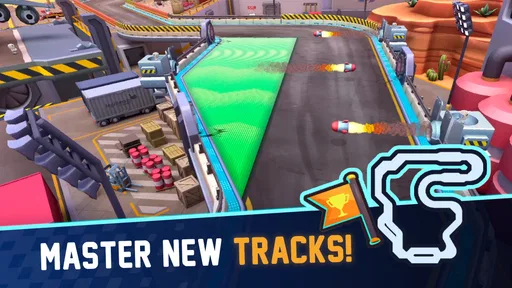
The art direction does useful work by keeping the racing world playful instead of technical. This is not trying to imitate a realistic rally broadcast. The visual language is brighter and more animated, which makes the game feel closer to an arcade toy than a driving simulator. That choice is important because it tells me how to judge the experience: I am looking for readable turns, satisfying movement, and personality, not accurate suspension behavior or a detailed car catalogue.
The rally setting gives the races a sense of place without slowing down the action. Dirt-road energy, quick changes of direction, and the idea of pushing through a course all support the mood. Even when I am concentrating on a corner, the presentation keeps the event feeling lively rather than severe. The setting works best when it frames the race as a playful challenge. It would be less convincing for anyone searching for a quiet scenic drive or a realistic motorsport career.
One subtle strength is the relationship between visual exaggeration and mechanical clarity. In a fast mobile racer, decoration can become a problem if it hides the racing line. Here, the cartoon presentation makes the action feel energetic while still encouraging me to focus on the road and the timing of a drift. That balance is more valuable than visual detail for this type of game. A beautiful course that makes corners hard to read would be a poor trade, especially on a small phone screen.
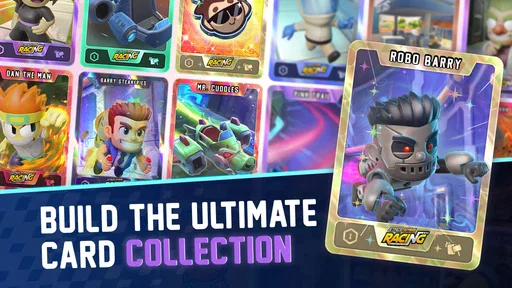
The collectible cards also fit the visual identity. They add a sense of collecting and progression that feels more like an arcade game than a traditional racing title. Their presence changes the rhythm outside the actual race: I am not only asking whether I drove well, but also thinking about what the collection means for my next attempt. This can make repeated races feel purposeful, although players who prefer a clean, skill-only racing loop may see the cards as an extra layer they did not request.
How to read the visual design while playing
I found it helpful to treat the scenery as a cue for pace rather than as something to admire during a race. The game’s bright presentation invites quick reactions, but the best results come from looking ahead and identifying the shape of the next turn before reaching it. If you stare at the vehicle or chase every visual effect, you are more likely to react late. That is a small but useful adjustment: let the art create excitement, while your attention stays on the route.
This also explains why the game may feel better in short sessions than in very long ones. Its visual language is active and upbeat, and that energy supports a handful of races. Over time, repeated courses or familiar patterns can become more noticeable, especially for players who expect the variety of a full console-style racer. I would not choose it for a long, quiet evening of exploration, but I would choose it for a compact burst of colorful competition.
Sound and rhythm give each race its forward pull
The audio direction is most effective when it reinforces movement. A racing game needs sound to make acceleration, drifting, and finishing feel connected, and this one benefits from that sense of momentum. Even without treating the soundtrack as a separate attraction, the overall audio mood helps turn a short event into a small performance. The race should feel like it is building toward something, not merely moving a vehicle from one point to another.
What I appreciate about the rhythm is that it matches the game’s arcade personality. The action is not presented with the restrained seriousness of a simulation. The sound supports quick decisions and keeps the atmosphere buoyant, which makes mistakes easier to accept. When a drift does not work, the experience feels like an invitation to try again rather than a harsh penalty for not driving perfectly.
That tone is particularly useful for new players. A realistic racer can make early errors feel embarrassing because every mistake seems to expose a lack of technical knowledge. Here, the audio and visual mood lower that barrier. You can experiment with cornering and speed without feeling that you need to understand every system before having fun. For families or casual players, that is a real advantage.
There is a trade-off, though. A consistently energetic presentation can become tiring for people who want a calmer driving experience. The game’s mood is designed to keep the pulse moving, so it is not the best fit for someone seeking a meditative road trip or a detailed motorsport atmosphere. I also think the audio works better as part of the whole than as a reason to play by itself. The mechanics remain the main attraction; the sound gives them shape and urgency.
Using rhythm to improve your driving
My practical advice is to use the audio as confirmation, not as your only timing tool. Listen for the sense of acceleration and the moment a drift settles, but keep your eyes on the course. This matters because sound can make you feel faster than you are actually driving. The most reliable improvement comes from combining that energetic feedback with early visual preparation for corners.
A useful everyday routine is to play a couple of races with the goal of learning rhythm rather than winning. Notice when you tend to brake or turn too late, then make one small adjustment in the next attempt. Because the races are compact, this kind of focused repetition is less demanding than committing to a long championship session. The game’s mood supports that process: it encourages another try without making practice feel like homework.
Drifting, cards, and the question of fair progression
The mechanical fit is strongest when the racing controls remain simple but still reward attention. Speed alone is not enough. A clean drift can help maintain momentum through a turn, while a poor entry can leave you recovering instead of attacking the next section. That gives the game a useful middle ground between an automatic runner and a technical racer. I can play casually, but I also have reasons to improve.
The key trade-off is accessibility versus depth. A light arcade control scheme is ideal for touchscreens because it reduces the number of actions competing for space. At the same time, fewer controls mean the game must create depth through timing, route knowledge, and progression. The drifting mechanic carries much of that responsibility. If you enjoy refining when to turn and how aggressively to carry speed, the system has appeal. If you want manual gears, detailed tuning, or simulation-level control, you will quickly reach the limits of this design.
The cards are the other major part of the loop. They give repeated races a reason beyond simply chasing a faster finish. I see them as a planning tool rather than a replacement for driving skill. Before a session, it makes sense to think about whether you are trying to improve your handling, build a collection, or simply complete a quick race. That small change in intention helps prevent the progression layer from feeling like busywork.
My main caution is that collectible systems can blur the line between skill and improvement. When a result changes because of progression as well as driving, a player may not always know whether a loss came from a poor corner or a weaker setup. That uncertainty is not fatal in a casual racer, but it can frustrate competitive-minded players. I would enjoy the cards most when they add variety without becoming the only route to success.
Three practical ways to get more from the mechanics
- Practice corner entry, not just the drift itself. Starting a drift too late usually means the problem began before the turn. Approach the corner with a clear idea of where you want the vehicle to be, then use the drift to preserve that line rather than treating it as a last-second rescue.
- Separate collection sessions from performance sessions. If you chase cards and a perfect finish at the same time, it is easy to lose focus. Decide whether the next few races are for building progression or improving technique, then judge the session by that goal.
- Use short repeat attempts to test one change. Change your timing or route choice once, then compare the result. Making several adjustments at once hides what actually helped and turns the game into guesswork.
These habits also reveal who will enjoy the game most. It suits players who like accessible racing with a light progression layer and enough handling to reward practice. It is less suitable for someone who wants every result to depend exclusively on raw driving skill, or for a player who dislikes collectible systems in racing games. In those cases, a minimalist arcade racer may be a better choice because it removes the extra progression question.
The purchase structure deserves a calm, practical look. The game is free, but optional items cost between $2.99 and $29.99 each. I would begin without spending and see whether the core racing loop holds your attention. If you are happy repeating races, learning turns, and collecting gradually, there is no reason to rush into a purchase. If progression starts to feel like a barrier rather than a reward, that is the point to decide whether the game is still worth your time, not simply whether another item might solve the frustration.
Who should install it, and who should pass?
I would recommend it to a friend who wants a colorful racing game that can be understood quickly but still gives drifting and timing some importance. It is especially well suited to short breaks, casual competition, and players who enjoy collecting alongside action. The Everyone rating also makes it a reasonable option for a shared family device, provided the person using it understands that optional purchases are available.
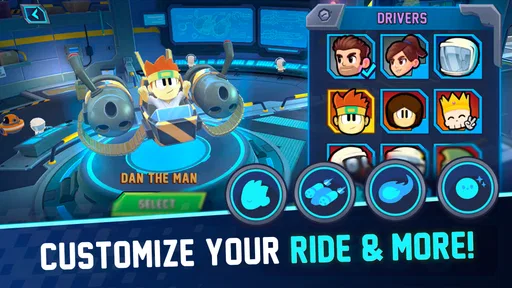
I would suggest skipping it if you are looking for the original Jetpack Joyride experience, a realistic rally simulator, or a racing game with deep vehicle customization. It is also not my first choice for someone who dislikes in-app purchase systems on principle. The game’s appeal depends on accepting its arcade tone and its blend of racing with collection. Remove either of those elements and the fit becomes much weaker.
A coherent arcade mood with a few important compromises
My final impression is that the game works because its art, sound, setting, and pacing point in the same direction. The bright rally atmosphere makes the races feel playful, the audio keeps the action moving, and the compact structure gives each attempt a clear purpose. Most importantly, those presentation choices do not completely bury the mechanics. I still need to think about lines, drifting, and momentum, even though the game never asks me to become a professional driver.
That coherence is the title’s biggest strength. It knows that mobile racing needs to be readable, quick to start, and forgiving enough for casual play. The card system gives the loop an additional reason to return, while the racing itself supplies the immediate excitement. The result is more engaging than a purely automatic speed challenge, but less demanding than a dedicated simulation.
The limitations are just as clear. The Jetpack Joyride wording can mislead people who expect the classic runner, and the racing may not provide enough technical depth for serious motorsport fans. The optional purchases also mean that players should decide early whether they are comfortable with the progression model. Its current 3.4 average from roughly 600 ratings reflects that it is an appealing but imperfect fit rather than a universal recommendation.
For me, the best way to approach it is as a cheerful arcade racer for focused ten-minute sessions. I would play a few events, learn one troublesome corner, check how my card collection supports the next attempt, and stop before the repetition becomes tiring. If you want approachable rally-flavored action with a strong playable mood, it is worth trying free first; if you want the old jetpack formula or uncompromising racing depth, choose a different game. Halfbrick Studios has created something recognizable in spirit but distinct in structure, and that distinction is exactly what a potential player should understand before installing it.
Pros
- Fast-paced races are easy to learn but still offer room to master.
- Vehicle variety keeps races feeling fresh across different play styles.
- Short levels work well for quick gaming sessions.
- Bright visuals and playful animations suit the Jetpack Joyride universe.
- Unlockable upgrades provide a steady sense of progression.
Cons
- Some upgrades and vehicles may require considerable grinding.
- Races can feel repetitive after extended play sessions.
- Frequent obstacles may feel frustrating on smaller screens.
- Progress can be slowed by limited in-game resources.
- The game may consume noticeable battery during longer sessions.
FAQs for Jetpack Joyride Racing
What is Jetpack Joyride Racing, and how does the gameplay work?
Jetpack Joyride Racing is an arcade-style racing game that combines fast side-scrolling action with jetpack-powered movement. Instead of simply driving along a track, you control a character who races through obstacle-filled courses, collects items, avoids hazards, and uses boosts to gain an advantage. The controls are designed to be easy to learn, although mastering timing, acceleration, and obstacle avoidance can take practice.
Is Jetpack Joyride Racing free to download and play?
The game is generally available as a free download, allowing you to start racing without paying an upfront purchase price. However, free-to-play games commonly include optional in-app purchases for upgrades, cosmetic items, currency, or other benefits. Some versions may also display advertisements. Before downloading, check the store listing for the current pricing, advertising, and purchase information, especially if children will be using the device.
Can I play Jetpack Joyride Racing offline?
Some basic gameplay may be available without a constant internet connection, but offline access can depend on the version of the game, device, and features you want to use. Online connectivity may be required for advertisements, events, leaderboards, cloud saves, updates, or in-app purchases. If you plan to play while traveling, it is best to launch the game once while connected and verify which modes remain accessible offline.
Does Jetpack Joyride Racing include multiplayer or competitive features?
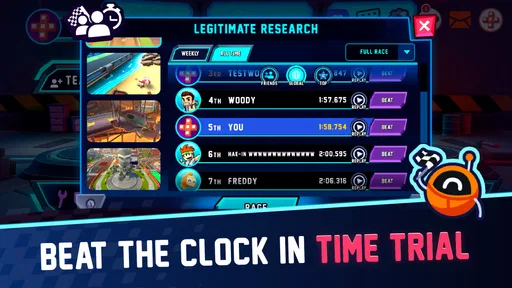
Jetpack Joyride Racing may include competitive elements such as rankings, challenges, timed events, or comparisons with other players, depending on the current release and available updates. These features can make repeated races more engaging, but they may require an internet connection and an account or platform service. Players should also remember that leaderboards and events can change as the developer introduces new content.
Is Jetpack Joyride Racing suitable for children, and are there any safety concerns?
The game is typically easy to understand and focuses on cartoon-style racing, action, and obstacle avoidance rather than realistic violence. Nevertheless, parents should review the age rating, advertising, data practices, and in-app purchase settings before allowing children to play. Because fast retries and reward systems can encourage extended sessions, using device-level purchase restrictions and reasonable play-time limits is recommended.


